

Feeding street dogs responsibly
Feeding changes a street. Done well it improves health and trust; done badly it creates conflict, dependence and disease. The difference is routine.
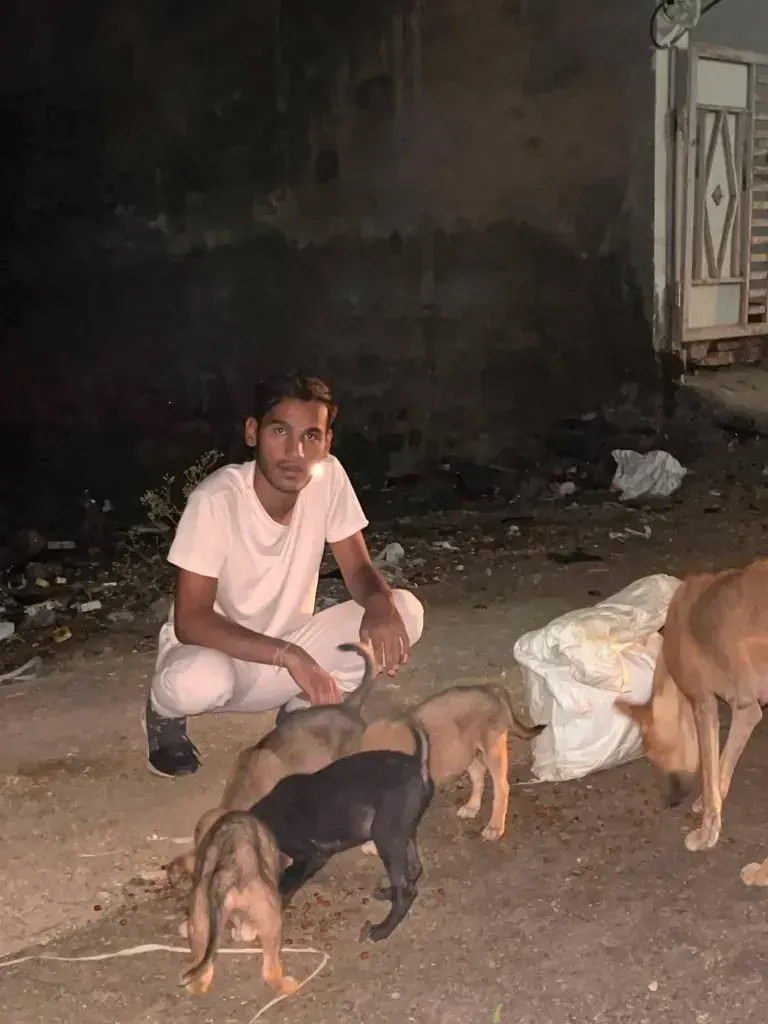
Feed a dog, not a crowd
Scattering food over a wide area pulls dogs from several streets into one place, and that is where fights, complaints and traffic accidents start. Feed in a fixed spot, away from the road, and remove the plates afterwards.
One bowl per dog, spaced apart, reduces guarding and lets the shy dog eat.
What to give
Street dogs do well on ordinary food: rice or roti with curd, boiled egg, a little boiled chicken, or a decent commercial dog food if the budget allows. Clean water matters more than people expect, especially in summer.
Avoid what makes them ill: sugary biscuits and cream biscuits as a staple, spicy gravy, fried food, milk in quantity, chocolate, onion, garlic, grapes and raisins, and cooked bones that splinter.
How much and how often
Once or twice a day at fixed times is better than constant grazing, because it lets you notice when a dog stops eating, which is often the first sign of illness.
Do not feed so much that the dog stops scavenging entirely without a plan for the days you cannot come. A feeder who disappears is a real risk, so keep the routine simple enough that someone else can cover it.
Water is the neglected half
In Indian summers, a shallow heavy bowl of clean water in shade saves more lives than food. Change it daily, scrub it, and keep it out of the sun.
Do not leave water in deep buckets where a puppy can fall in.
Feeding and vaccination belong together
A dog you can feed is a dog you can eventually vaccinate and sterilize. Feeding without that follow-up grows the population without protecting it.
When the municipal ABC van or a vaccination camp comes to your area, being the person the dogs trust is what makes the catch possible.
General guidance for street dogs in India, written for volunteers and residents. It is not a diagnosis and does not replace a veterinarian who can examine the animal.
Related guides

Vaccination and deworming, explained simply
Rabies is the one that matters most for a street dog and for the street. Here is what the vaccines are, when they are…

Understanding ABC and sterilization
Animal Birth Control is the only approach that reduces street dog numbers humanely. Here is how it actually works, and…