
Reading street dog body language
A street dog tells you what it is about to do. Learning the four signals that precede a bite keeps you and the dog safe.

Relaxed, or pretending to be
A relaxed dog has a soft, level body, an open mouth, ears in their natural position, and weight spread evenly. It will sniff, look away, and move on.
A dog standing very still with a closed mouth, weight shifted back and eyes fixed on you is not relaxed. It is deciding.
The ladder before a bite
Aggression is rarely the first move. The sequence usually runs: looking away, yawning or licking the lips, tucking the tail, lowering the head, showing the whites of the eyes, a low growl, then a snap that is meant as a warning.
A dog that has been punished for growling may skip the warning entirely. That is why "he bit without warning" is usually a dog whose warnings were suppressed.
Fear looks like aggression
Ears back, tail tucked, body lowered, backing away, barking from a distance: that is fear, and fear is the most common cause of bites in street dogs.
Give that dog distance and it will almost always stop. Close the distance and you remove the only option it has.
Pain changes everything
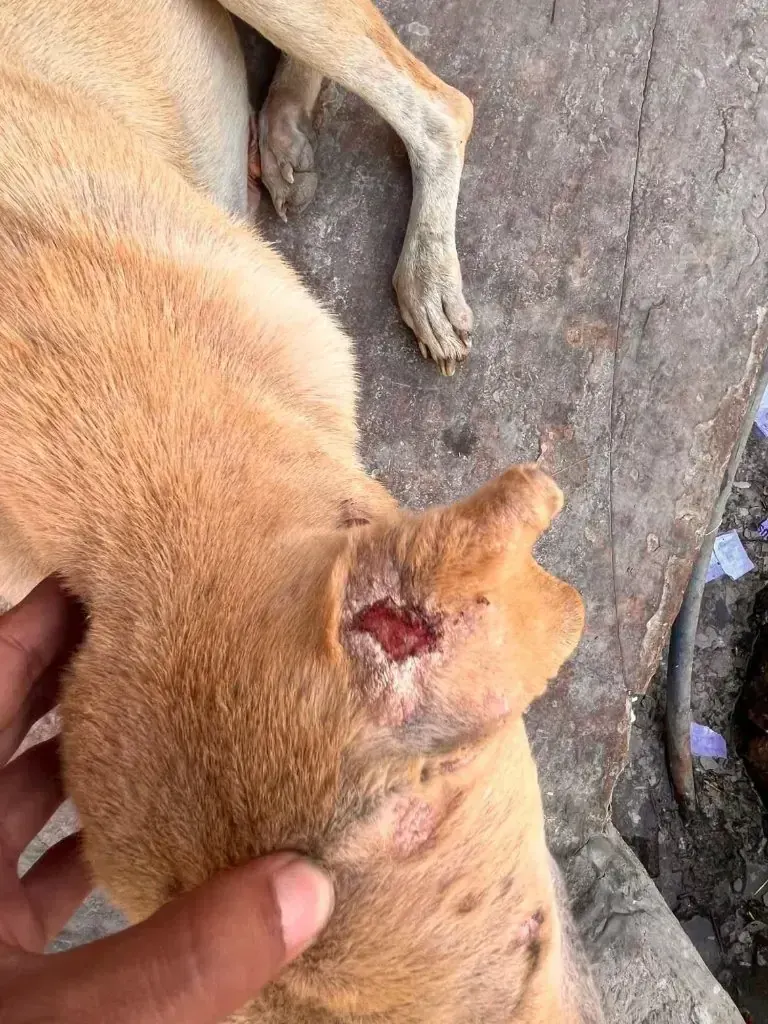
An injured dog that has known you for months may still snap when you reach for the wound. Pain lowers the threshold for everything.
If a normally friendly dog growls when touched, suspect pain and stop touching. Use a muzzle and a vet, not reassurance.
What to do with the information
Turn side on, look away, yawn, move slowly, and never loom over a dog. If a dog is barking and backing away, let it. If a dog is stiff, silent and facing you, back off without turning your back until there is distance.
Teach children the same two rules: never run past a dog, and never take food from one.
General guidance for street dogs in India, written for volunteers and residents. It is not a diagnosis and does not replace a veterinarian who can examine the animal.
Related guides

How to help a stray dog safely
The first five minutes with a street dog decide whether it trusts people again. Space, food, observation and a phone…
Rescue guidelines and when to call
A clear sequence for the moment you find a dog in trouble: what to do, who to call in an Indian city, and the…