

Field note
The street dog who already has a guardian
Half the dogs on a street in India are not unowned. Someone feeds them, watches them, and will fight you for them. Work with that person.
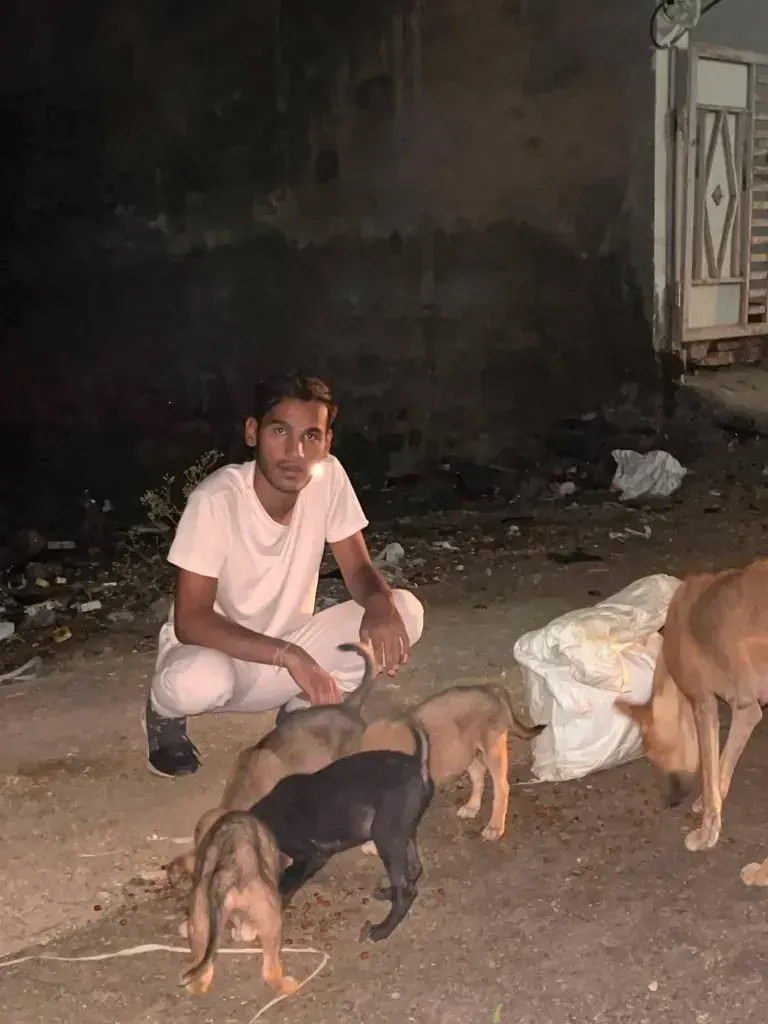
Unowned is not the same as uncared for
In most Indian localities, the dogs on a street belong to that street. A shopkeeper puts out rice. A guard knows which one limps. Somebody pays for the rabies vaccine when the municipal camp comes.
This is not a loophole in rescue, it is the backbone of it. These dogs are vaccinated, sterilized, fed and watched because one person decided to.
Ask before you lift
A dog who is clean, fed and calm in daylight is usually not abandoned. Before taking one, ask around: the tea stall, the watchman, the vegetable seller. Someone will know.
If the dog is genuinely in danger, that changes. But "in danger" means traffic, injury or cruelty, not "outside". Living outside is the normal condition of a street dog in India.
The feeder is your best partner
A feeder can tell you the dog's name, its history, whether it has been sterilized, and which dogs are related. They can also hold a bowl while you work, which is worth more than any equipment.
Where there is no feeder, there is often an opportunity: one reliable person, one bowl, one time of day. That is how a new care point starts.
When removal is right
Removal is right when the dog is sick or injured and needs treatment, when there is documented cruelty, or when the locality is genuinely hostile and the dog is at risk of poisoning.
Even then, tell the feeder. A dog that vanishes without explanation is how feeders stop trusting rescuers, and that distrust costs the next ten dogs their care.
A street dog with a feeder, a vaccination history and a place to sleep is not a failure of rescue. It is what success often looks like.
This note is educational and not a report of a specific rescue or a substitute for veterinary advice. If a dog is injured, contact a veterinarian.
Related field notes
Field note
The dog who will not be caught
Some dogs are not difficult. They are frightened, and fear looks like speed. This is how a patient catch actually works.
Read the note
Field note
Saying no when it is the kindest answer
Every rescuer eventually meets a dog they cannot help in time. Pretending otherwise is how people burn out and how dogs get…
Read the note